
In this Article
On November 18, Google CEO Sundar Pichai officially introduced Gemini 3, the new company’s flagship model. As it says: “Gemini 3, our most intelligent model, that combines all of Gemini’s capabilities together so you can bring any idea to life.” This launch comes at a time when the AI field is alive with technical breakthroughs. Models now handle a million-token context, support full multimodality, and use agentic reasoning. Now, it’s not just about text generation; users can create whatever they want.
What are the new distinctive features of Gemini 3, and is it worth choosing over its competitors? Let’s see.
Why is Gemini 3 so special?
Gemini 3 gives us meaningful upgrades: native multimodality, a much longer context window, and improved agentic reasoning inherited from Gemini 2. It works with text, images, audio, and video within a single unified architecture. At the same time, it completes multi-step tasks with higher accuracy.
Take a look at the benchmarks. AI benchmarks are standardized tests to measure a model’s reasoning, comprehension, coding, multimodal understanding, and task performance. And here, Gemini 3 makes a compelling case. Across almost all major benchmarks, Gemini 3 tops both its previous version and the latest GPT-5.1 and Claude Sonnet 4.5. One of the most impressive results is in Humanity’s Last Exam, where Gemini 3 scores 37.5%. It is higher than competing frontier models.
Another test is ARC-AGI-2, which measures abstract reasoning and pattern recognition. This is where Gemini 3 again shows a 20–25-point lead, demonstrating stronger problem-solving in tasks that mimic human intelligence patterns.
A particularly interesting benchmark is Vending-Bench 2. Here, models operate a simulated vending machine, setting prices, managing inventory, analyzing demand, and tracking earnings autonomously. Gemini 3 had the highest revenue, earning over $5,000 during the test. The previous leader, a Claude-based model, earned around $4,000. It means Gemini 3 not only won but did so with a significant margin.
The only area where Gemini 3 does not take the lead is the Software Engineering Bench. Here, Claude Sonnet remains the top model, but the gap is minimal, around 1%. In benchmark terms, Gemini 3 positions itself as one of the strongest commercial models currently available.
Deep Thinking model peculiarities
“Deep Thinking” is a so-called redefined way of handling tokens. The model uses more tokens per query, but the trade-off is better reasoning, more accurate answers, and stronger problem-solving. From day one, Google integrated Gemini 3 into flagship products, notably Google Search. In AI Mode with Thinking activated, users can upload documents or ask detailed queries. Let’s try it out. Our prompt:
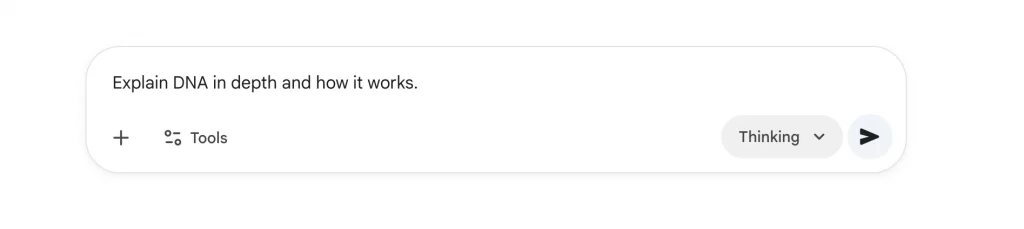
As a result, the model generates a fully interactive AI-driven page, with dynamic tables, graphs, charts, images, and animations that users can click to explore.
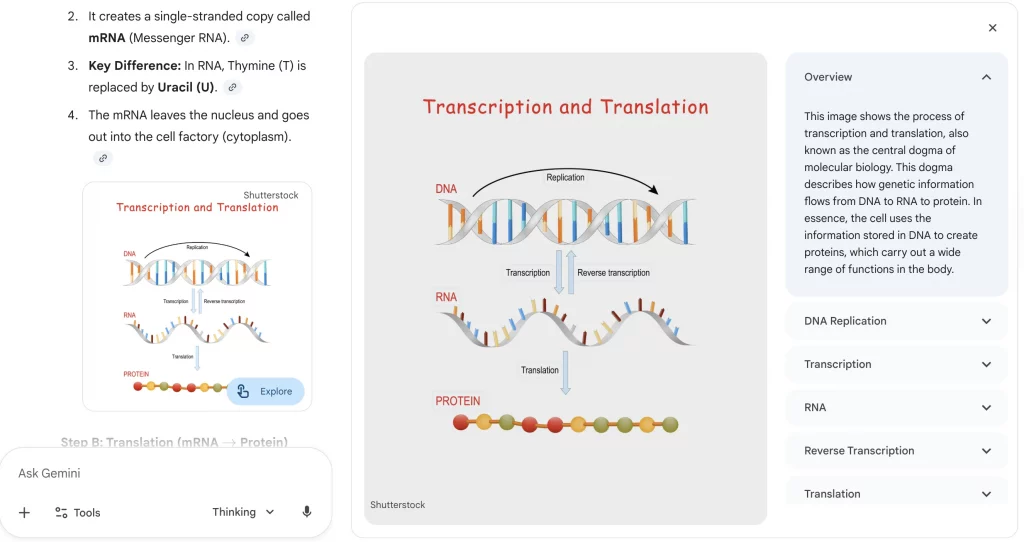
Instead of navigating static pages, content could be generated on the fly as AI-friendly feeds or interactive modules. Gemini 3’s Deep Thinking may be a first step toward this next-generation, AI-powered web experience.
Learn, build, and plan anything
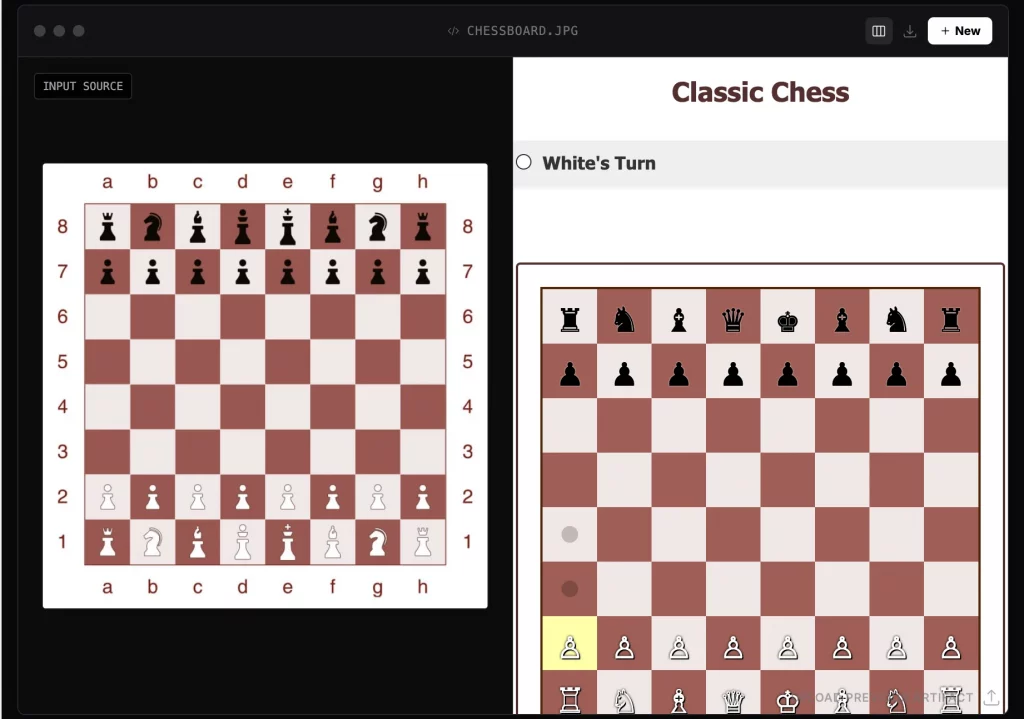
Gemini 3 is really about multimodality. It interacts with multiple data types, including text, images, video, audio, and code. In Google AI Studio, users can upload pictures or video frames and ask the model to generate applications or interactive content. For example, we can try their “Bring any idea to life.” If you upload a chessboard image, Gemini 3 creates a functional chess game in minutes.
Gemini is also becoming more personal for us. The model supports agentic workflows that connect to your environment and services. For instance, in agent mode, Gemini 3 can organize your inbox by interacting directly with Gmail, presenting a mini-interactive interface to manage emails.
Antigravity space for your ideas
Gemini 3 comes with its own fully integrated development environment, reminiscent of VS Code or Cursor. Users write a prompt, select a model, and choose agent mode. In this environment, Gemini 3 can:
- Generate frontend and backend code (HTML, CSS, Python).
- Independently build and connect every part of a full-stack application, including third-party integrations.
- Make UI mockups and screenshots.
Manage iterative debugging, where the model interprets errors, suggests fixes, and updates code dynamically.
With this setup, developers can focus on high-level design and logic while the model does the rest of the work, like repetitive coding, scaffolding, and integration tasks. Many in the developer community believe Antigravity is built on, or heavily inspired by, the Windsurf codebase and agent system.
Nano Banana Pro
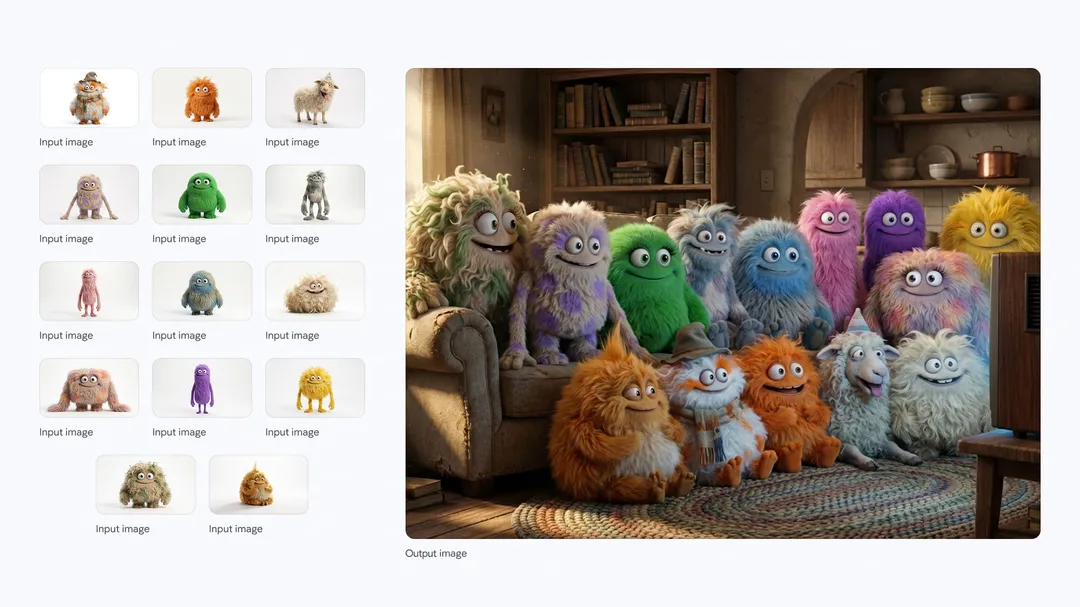
The cherry on top is the release of Nano Banana Pro, an image generation and editing model, built on Gemini 3 Pro. This model creates exclusive infographics. It can work with up to 14 objects or characters simultaneously.
Google took into account that there are more and more deepfakes, so it introduced SynthID, an authenticity mechanism. SynthID embeds invisible markers directly into generated content. For example, when SynthID is applied to images, it embeds tiny, invisible pixels directly into the image’s structure. These pixels are imperceptible to the human eye but can be detected by AI systems.
Final verdict
Gemini 3 is a must-try for developers and not only. This is a next-generation model, not just a mix of previous versions. It’s great for massive documents, extended codebases, and multi-step tasks. With multimodal reasoning, agentic thinking, and deep-learning capabilities, it outshines many competitors. We also recommend testing Gemini 3 with our residential or mobile proxies. With them, reliable, private, and safe access to data is guaranteed.
Gemini 3 is powerful, but truly speaking, it’s not perfect; it can still make mistakes. DataImpulse encourages users to combine AI output with their own creativity and judgment. Let’s protect authenticity.
*Please use AI ethically. This article does not endorse harmful uses.


 State/City/Zip/ASN Targeting