
How to Set Up a Proxy in ParseHub
ParseHub is a user-friendly web scraping tool that allows you to extract data from websites in a structured and organized manner. It simplifies the process of gathering information from web pages by automating the data extraction process. With ParseHub, you can easily select and extract specific data elements, such as text, images, and tables, from websites without any coding knowledge. It provides a visual interface where you can navigate and interact with web pages, making it convenient for both beginners and experienced users to scrape data from various websites
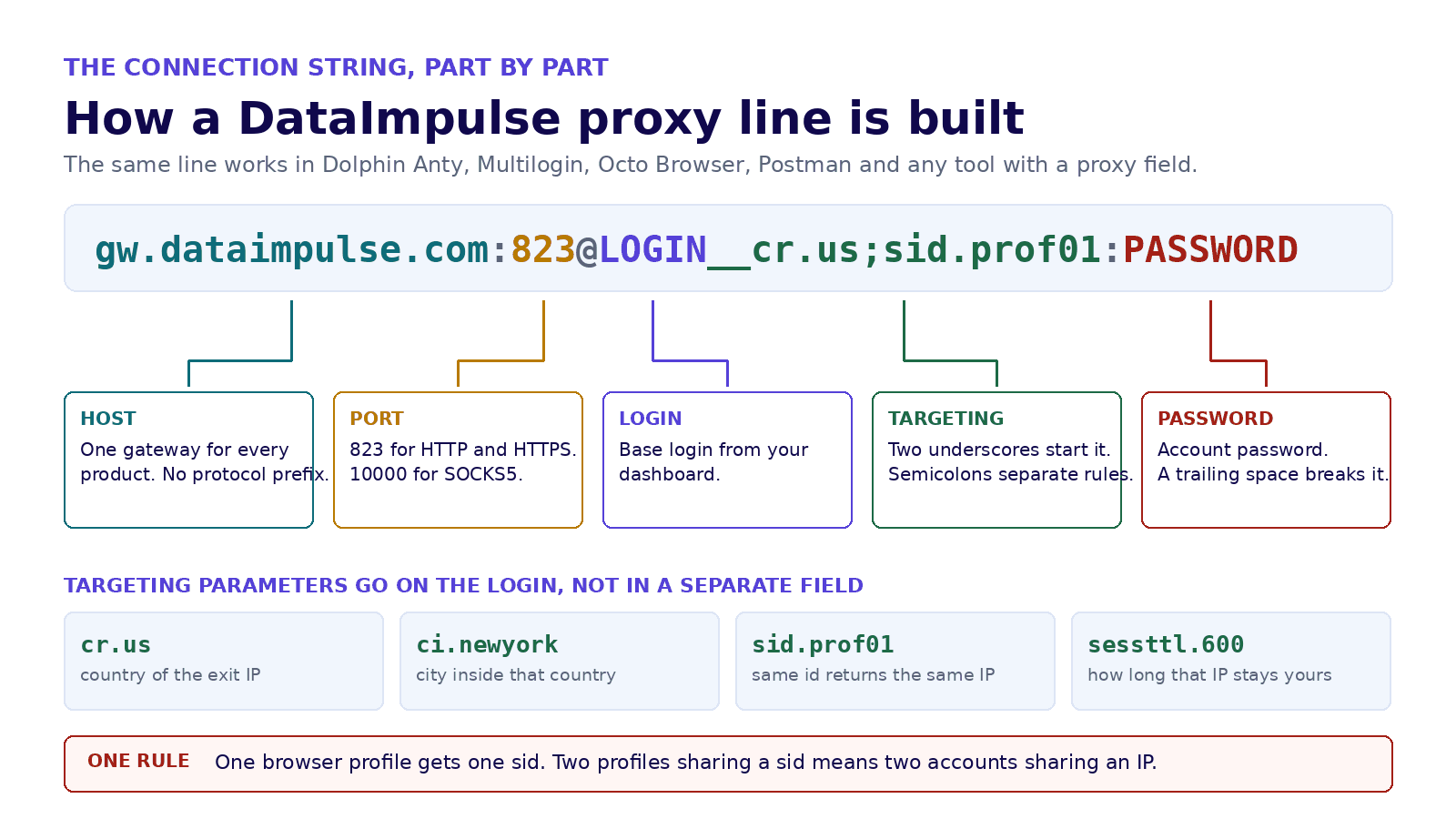
ParseHub needs four values: host, port, login and password. Paste them in this form, or in separate fields if the tool asks for them separately:
Below: the exact format with country targeting, the setup steps, how to confirm the exit IP, and what every error message means.
What you need before you start
A ParseHub account, a DataImpulse plan with traffic on it, and your proxy credentials from the dashboard.
| Field | Value | Notes |
|---|---|---|
| Host | gw.dataimpulse.com | one gateway for residential and mobile |
| Port | 823 for HTTP and HTTPS, 10000 for SOCKS5 | the protocol and the port must match |
| Login | your base login, with targeting appended | LOGIN__cr.us;sid.prof01 |
| Password | from the dashboard | a trailing space is the most common cause of a failed test |
ParseHub proxy format
Everything lives in one line, and targeting is appended to the login rather than set in a separate field. Two
underscores start the parameters, semicolons separate them.
If ParseHub asks for host, port, login and password in separate fields, split the same line: the host is
gw.dataimpulse.com, the port is 823, and the whole LOGIN__cr.us;sid.prof01 part goes into the username field.
Setting up a proxy in ParseHub, step by step
Integrating DataImpulse’ proxies with ParseHub is a simple process
Before you begin, make sure to whitelist your IP address in the DataImpulse dashboard in Residential plan section > Manage Whitelist IPs. Keep your user credentials handy as you may need them for authentication in ParseHub.
Now, let’s go through the steps:
- Download ParseHub and install it on your computer.
- Open ParseHub.
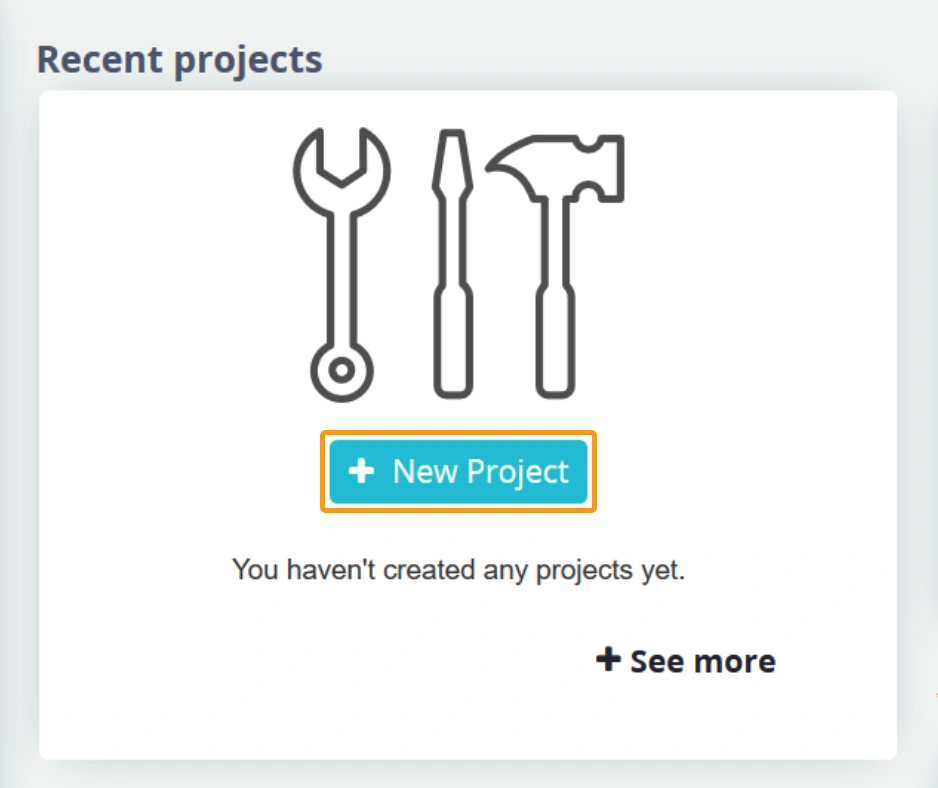
- Start a new project by clicking the “+ New Project” button on the home screen.
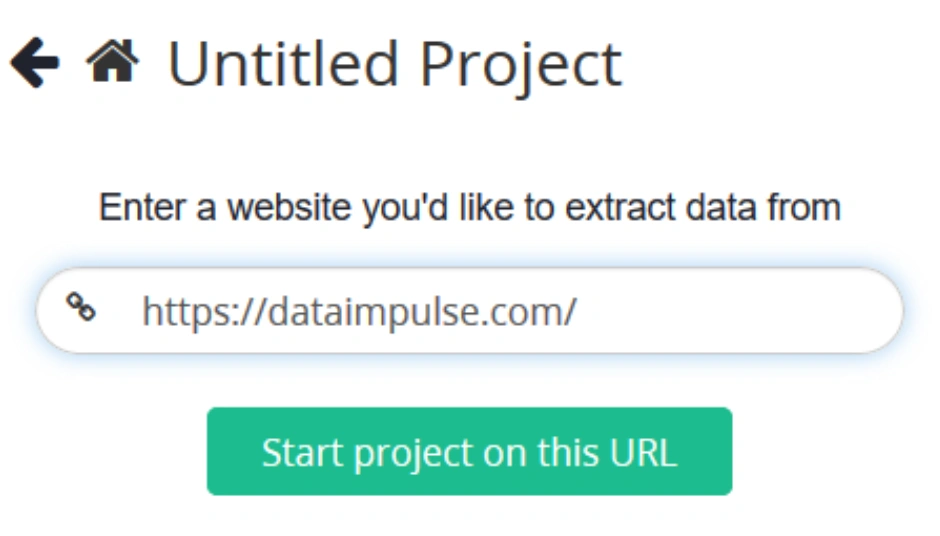
- Enter the URL of the website you want to scrape, such as dataimpulse.com Click on “Start project on this URL.”
- Wait for the project to be prepared and switch to the “Browse” mode.
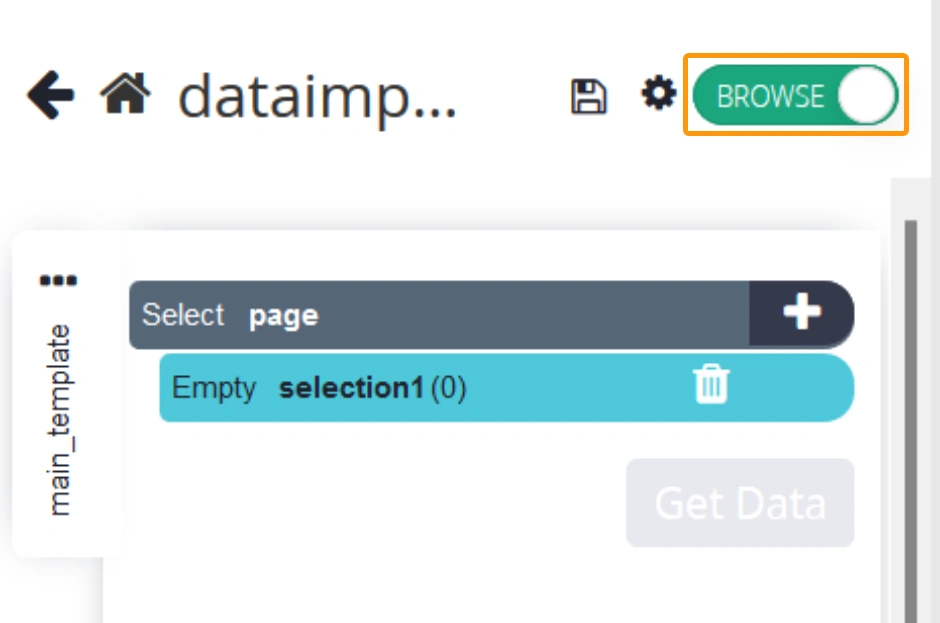
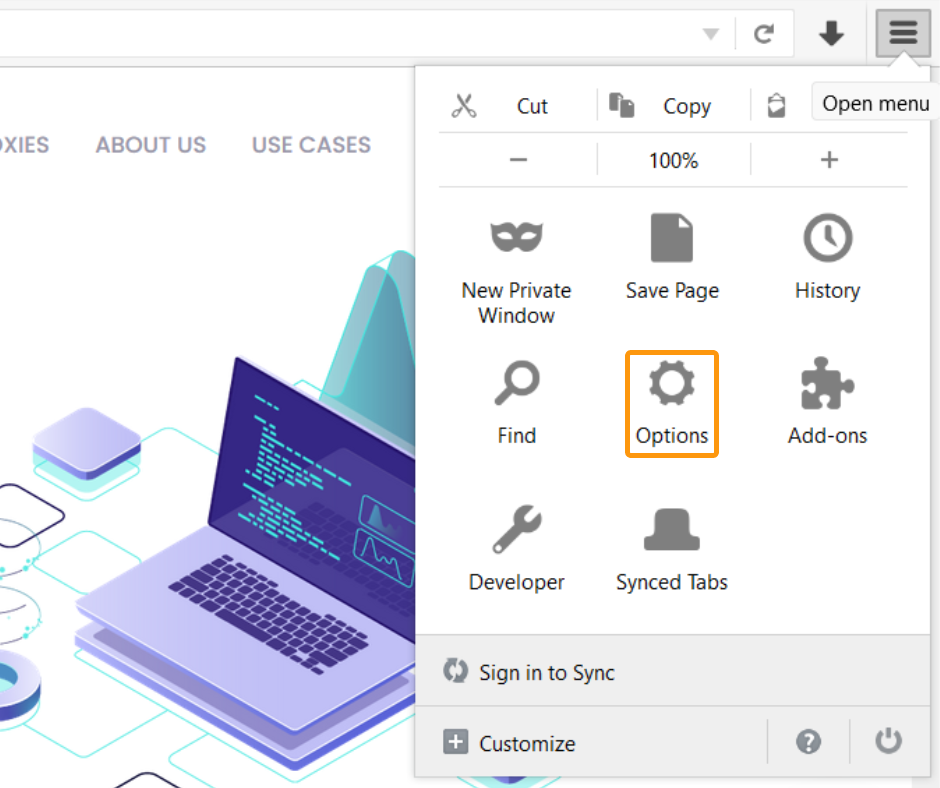
- When the “Browse” slider turns green, click on the drop-down list at the top-right corner and select “Options.”
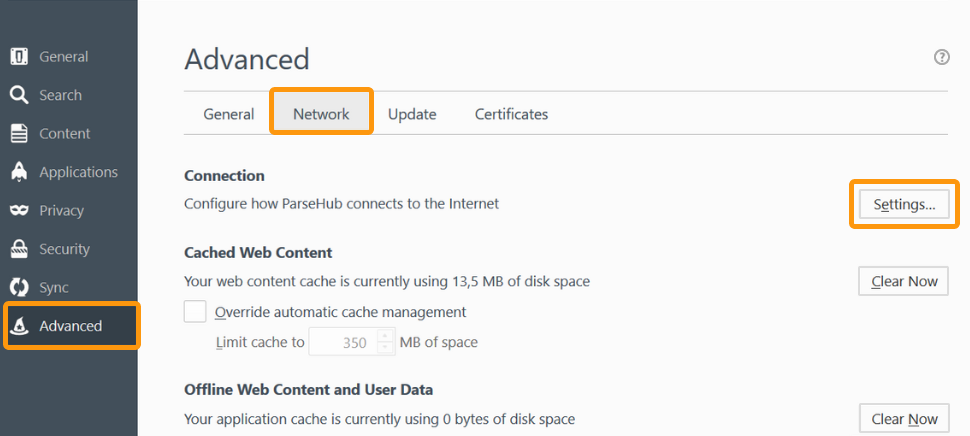
- Choose “Advanced,” then click on the “Network” tab and select “Settings.”
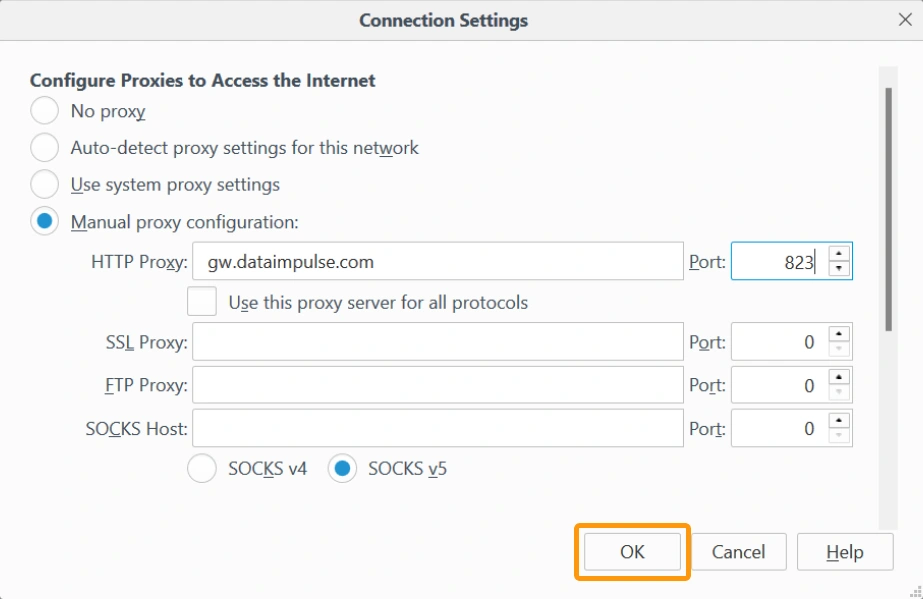
- Choose “Manual proxy configuration.” Enter “gw.dataimpulse.com” in the “HTTP Proxy” field and “823” in the “Port” field. Click “OK” to save the settings.
- Open a new tab and visit any website. You may see a message similar to the one shown in the image below (the photo is taken from Parsehub, the actual details may differ in your case).
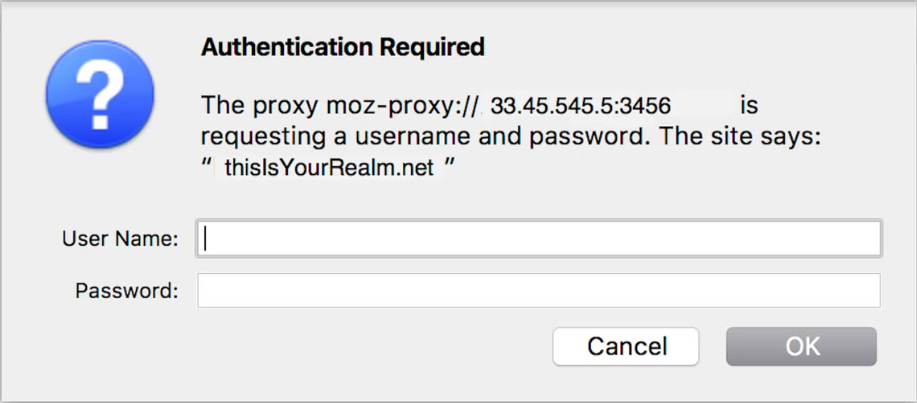
How to integrate custom proxies with your Parsehub account?
- After starting your project, click on the settings button at the top.
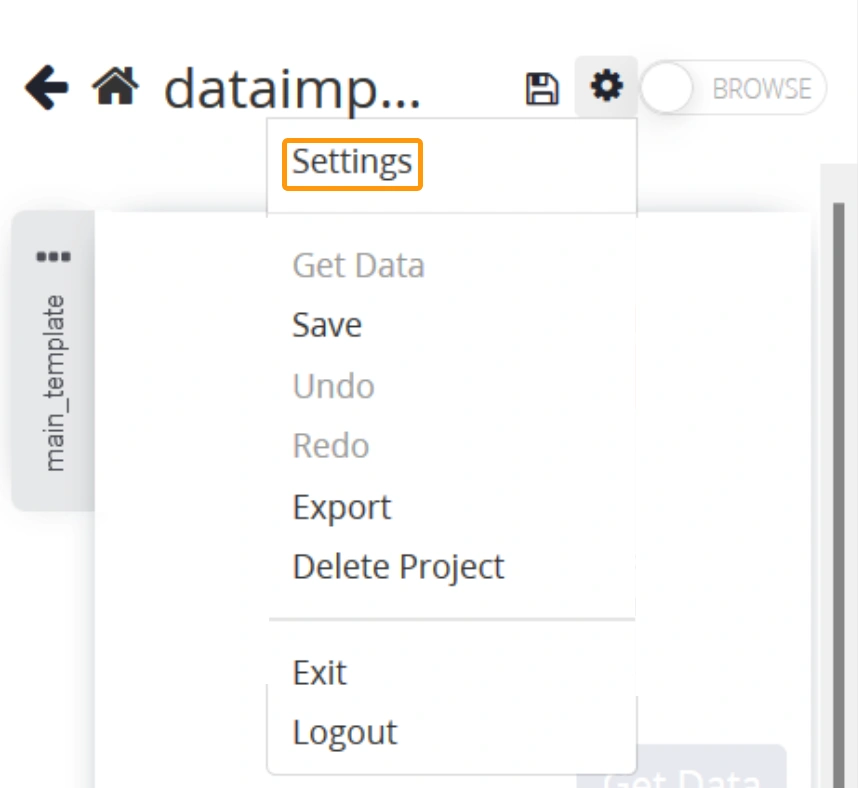
- Once the Settings menu appears, you will find a checkbox labeled “Rotate IP address.” Please note that this premium feature of Parsehub requires a paid plan.
Below that, you will see a textbox labeled “Custom Proxies.” Paste your obtained proxy with the corresponding realm into this textbox. (Please remember that the provided custom proxy here is an example from Parsehub, and yours will be different.)
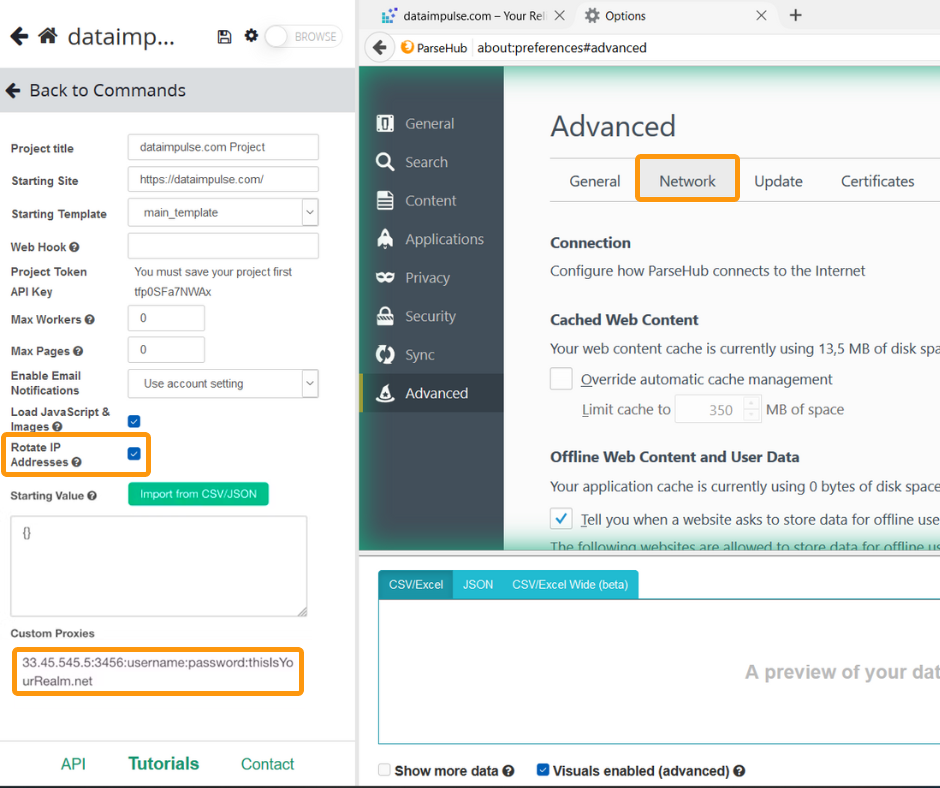
If you have multiple custom proxies that you want to rotate, you can add all of them to the Custom Proxies field, each on a new line.
- After configuring these proxies on your account, you can save the project and run it.
That’s all! You have now successfully integrated DataImpulse Residential Proxies with ParseHub. To ensure it is functioning correctly, you can verify your IP address on an ip-api.com
How to check the proxy actually works
A green test button only means the credentials authenticated. It does not mean you got the country you asked for.
- Exit IP: open an IP lookup service through ParseHub and compare country and city with your targeting.
- Timezone and locale: they should follow the exit node, not your own machine.
- Stickiness: reconnect and check that the same session id returns the same address.
A wrong country on the first request or two is normal while the session settles. If it is still wrong after three
attempts, the targeting parameter is malformed.
ParseHub proxy not working: errors and fixes
| What you see | What it actually is | Fix |
|---|---|---|
| 407 Proxy Authentication Required | wrong password, or no traffic left | re-copy the password without spaces, check the balance |
| Connection failed or refused | protocol and port do not match, or a typo in the host | 823 for HTTP, 10000 for SOCKS5, host without a protocol prefix |
| Test passes, wrong country | targeting written into the wrong field | parameters belong on the login after two underscores |
| IP changes mid session | no session id, or the TTL expired | add sid and sessttl, and remember sessttl is in seconds |
| Two profiles show the same IP | the same session id reused | one profile, one sid, forever |
Rotating, sticky or mobile: which one for which job
| Job | Setup | Why |
|---|---|---|
| One account per profile, long sessions | sticky: sid plus sessttl | the platform sees one stable location |
| Registering many accounts | sticky, a new sid per profile | each account needs its own IP history |
| Scraping or checking pages at volume | rotating: no sid | a fresh IP per request spreads the load |
| Mobile first platforms | mobile pool, sticky | carrier IPs carry more trust on app centric platforms |
Mobile proxies use the same host, port and login format. Only the pool behind your login changes.
FAQ
How do I add a proxy to ParseHub?
Open the proxy settings, choose HTTP, and enter gw.dataimpulse.com as the host with port 823, then your login and password from the dashboard. If ParseHub takes one line, paste gw.dataimpulse.com:823@LOGIN:PASSWORD.
What proxy format does ParseHub use?
Host, port, login and password. Country and session parameters are appended to the login after two underscores, for example LOGIN__cr.us;sid.prof01, not entered in a separate field.
Why does the ParseHub proxy test fail?
Most often the password carries a trailing space, or the port does not match the protocol. Use 823 for HTTP and HTTPS and 10000 for SOCKS5, and copy the credentials straight from the dashboard.
Can I use mobile proxies with ParseHub?
Yes. The host, the port and the login format are identical. Only the pool your plan gives you is different.
Can two ParseHub profiles share one proxy?
Technically yes, in practice never do it. Two profiles on one IP link the accounts together. Give each profile its own session id.
The same connection line works in our other setups: Dolphin Anty, Puppeteer and Multilogin. See how residential proxies and mobile proxies differ before you pick a pool.

 State/City/Zip/ASN Targeting