In this Article
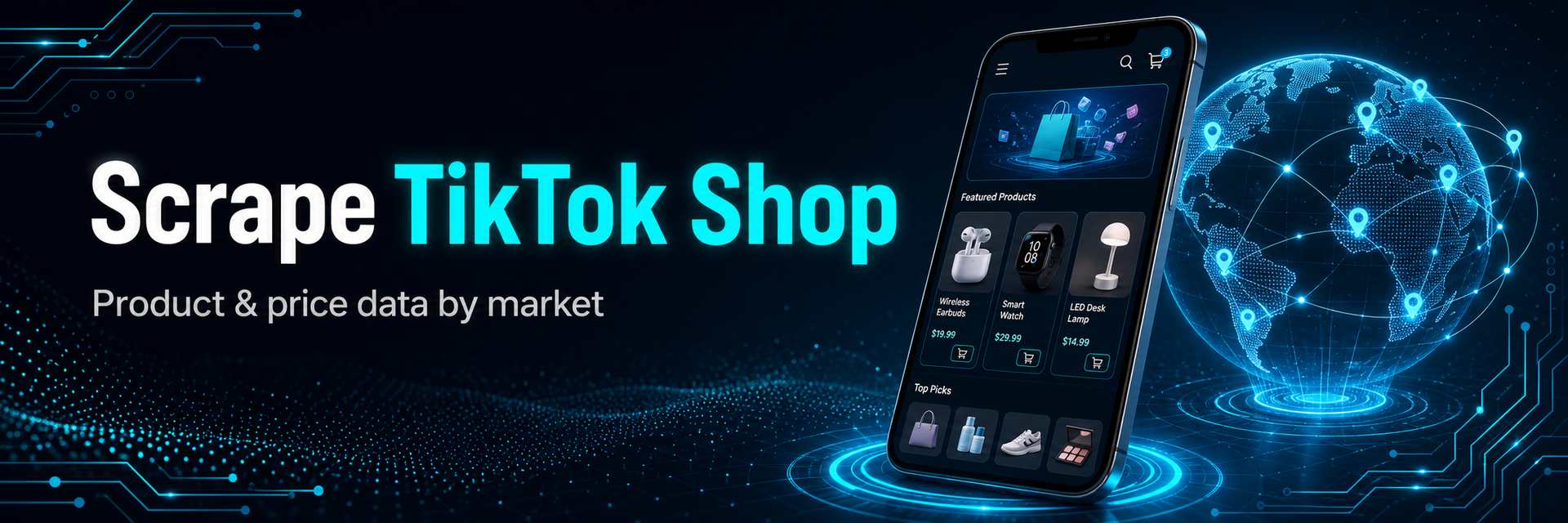
TikTok Shop has become a major e-commerce surface, and scraping it means collecting public product data — listings, prices, variants, ratings, review counts and seller info — for price monitoring, product research, MAP compliance and market analysis. Like the rest of TikTok, the Shop is heavily defended and highly regional. This guide covers what you can collect, how to approach it, and why geo-targeted residential proxies are essential for accurate, per-market TikTok Shop data.
I’m Andrii Byzov, an AI-Native Fractional CMO who works with e-commerce and pricing data. Below: the data, the method, the proxy layer, and the responsible way to do it. Related reading: how to scrape TikTok, price comparison, and is web scraping legal.
Key Facts
- Collect public product data — listings, prices, variants, discounts, ratings, review counts, shop/seller info. Not private seller dashboards or buyer data.
- TikTok Shop is region-specific — catalogs, prices and availability differ by country (US, UK, SEA and more), so geo targeting is non-negotiable.
- It’s heavily defended — the same app-style requests, rate limits and fingerprinting as the rest of TikTok.
- Method: third-party commerce/TikTok APIs or DIY with a headless browser/endpoints plus proxies and a parser.
- Geo-targeted residential proxies are what make per-market prices and catalogs accurate — you must query as a shopper in that country.
What you can collect from TikTok Shop
The defensible target is public storefront data: product titles, prices and discounts, variants, images, star ratings and review counts, and public shop/seller details. What’s off-limits is anything private — seller back-office dashboards, buyer personal data, or content behind a login you don’t own. Public product data is broadly defensible to collect; private data is not.
Why TikTok Shop needs a per-market approach
TikTok Shop isn’t one global catalog — it’s a set of regional marketplaces. A product, its price, its availability and even whether the Shop exists differ by country. If you scrape from a single location you get one market’s view and miss the rest, and you may see prices no local shopper actually pays. Accurate price monitoring or product research therefore requires querying as a shopper in each target country — which means an IP in that country.
How to scrape TikTok Shop
- Third-party APIs. Some commerce/TikTok data vendors return structured Shop data as JSON with anti-bot handled — fastest to ship, per-request pricing, vendor dependency.
- DIY with proxies. Call the Shop’s public endpoints or drive a headless browser through geo-targeted rotating proxies, then parse listings and prices yourself. Most control, lowest marginal cost, and the route where proxy quality and geo accuracy decide the outcome.
Why proxies are essential
- Geo-targeted residential IPs return the real catalog and prices for each market — the single most important requirement for TikTok Shop.
- Rotating IPs spread requests so you aren’t rate-limited or blocked while pulling many products.
- Mobile IPs help on the toughest endpoints, matching TikTok’s mobile-first traffic.
DataImpulse provides residential ($1/GB) and mobile proxies with country, city and ASN targeting on pay-as-you-go — so a price-monitoring pipeline can pin each request to the exact market it’s tracking.
How to do it responsibly
- Collect public product data only — no private dashboards, no buyer data, no bypassing logins.
- Pace requests and rotate IPs to avoid degrading the service.
- Respect pricing-data use rules and keep collection read-only.
- Use ethically sourced proxies for a defensible pipeline. (See proxies for web scraping.)
Common use cases
- Price monitoring & MAP compliance across regional TikTok Shops.
- Product & assortment research — what sells, at what price, in each market.
- Competitor & seller tracking — catalog, ratings and pricing moves.
- Trend-to-commerce analysis — connecting viral content to Shop demand.
FAQ
Is it legal to scrape TikTok Shop?
Scraping public TikTok Shop product data (listings, prices, ratings) is broadly defensible, and using proxies is legal. Risk concentrates in private seller/buyer data and access-controlled areas. Collect public, read-only data and mind personal-data rules. This is general information, not legal advice.
Why do I need geo-targeted proxies for TikTok Shop?
TikTok Shop is a set of regional marketplaces with different catalogs and prices. To get the real prices a local shopper sees, you must query from an IP in that country — so country-level residential proxies are essential.
What data can I collect from TikTok Shop?
Public storefront data: product titles, prices, discounts, variants, images, ratings, review counts and public shop/seller info. Private seller dashboards and buyer data are off-limits.
Rotating or sticky proxies for price monitoring?
Rotating residential is the default so each product request uses a fresh IP and you aren’t rate-limited. Use a sticky session only when a multi-step flow needs to hold one IP.
Can I use an official API for TikTok Shop?
Official commerce APIs are aimed at sellers managing their own shops, not broad cross-seller price collection. For market-wide monitoring, teams use third-party APIs or DIY scraping with geo-targeted proxies.
Monitor TikTok Shop prices in every market
Accurate TikTok Shop data depends on querying as a local shopper. Get ethically sourced residential proxies from $1/GB — pay-as-you-go, with country, city and ASN targeting and traffic that never expires — and pin every price check to the right market.
This article is general information, not legal advice. Review TikTok’s terms and consult counsel for a commercial scraping project.
 State/City/Zip/ASN Targeting